

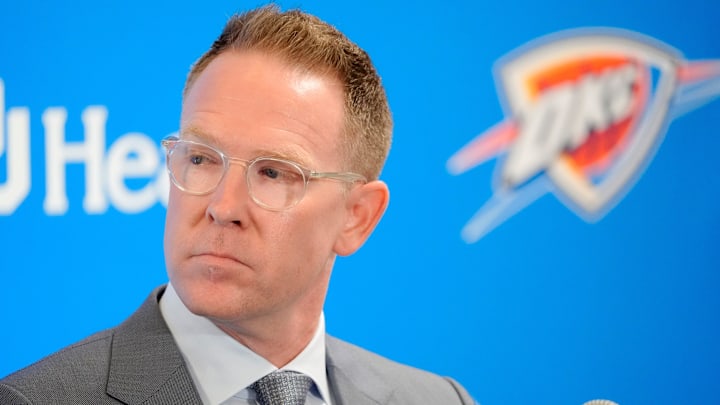
The NBA is rooting against the Oklahoma City Thunder on Sunday afternoon in the NBA Draft Lottery. If they win the first pick, it will be a gut punch to 29 other teams and to the league itself.
That's a direct way to state a somewhat obvious truth, but let's flesh it out a bit more. The league is fine with the Thunder being a successful team. Do they wish they would ease up and let them get a few more games out of the Los Angeles Lakers being in the second round of the playoffs? Sure, but that is a minor thing.
They are even fine with the Thunder winning the championship last year. When a small market team wins, it communicates to partners, ad companies, even potential owners that the league's attempt at parity is working, and that it is a valuable thing to own or be connected with a small market team. The money and success are not merely centered with the big market teams like in baseball.
The NBA wants to make money
Yet it is undeniable that the most important thing to the NBA league office is making money. It drives all of their decision-making. Yes, having a balanced and fair league matters, making statements on social issues matters, making the games fun and entertaining matters -- but only because all of those things drive the long-term profit of the league.
How does this relate back to the Thunder and Sunday afternoon? The NBA is fine with the Thunder being good for a year or two, but what they cannot stomach is the idea that a relatively small-market team in the middle of the country might put together a team so dominant that they win five or six or seven titles in the next decade.
There is a point where having a dynasty tips from a good thing (everyone loves a villain in sports) to a very bad thing. If the championship feels inevitable each year, interest in the playoffs -- the best product the league has to offer -- will wane, and hate for the Thunder will dissolve into apathy.
The benefits of a truly dominant team in a big market are obvious. The Showtime Lakers built a massive brand by winning five titles in the 1980s. The Michael Jordan Chicago Bulls won six titles in the 1990s and became the in-vogue brand. The Golden State Warriors print money for media partners.
What each of those teams, even in the midst of their success had, were challengers. Teams capable of pushing them. The Lakers had the Boston Celtics. The Bulls had a wave of East rivals. The Warriors had the Cleveland Cavaliers.
The NBA doesn't want the Thunder to win the lottery
If the Thunder land the first pick in the 2026 NBA Draft, they will take a team that has absolutely dominated the league for the last two seasons and add a future superstar to it. The presumptive two-time MVP Shai Gilgeous-Alexander, All-Defense big man Chet Holmgren, All-NBA forward Jalen Williams make for a formidable core. Cason Wallace and Ajay Mitchell could be All-Stars on a different team.
And now the Thunder are going to add AJ Dybantsa or Cameron Boozer to the mix? A cost-controlled star to take their talent level to the moon? Mark Daigneault would have an embarrassment of riches at his disposal, and the rest of the league wouldn't stand a chance.
Victor Wembanyama is really good, but the Spurs couldn't match that talent level. The Houston Rockets would have no shot at catching the Thunder. The Minnesota Timberwolves won't have that type of ceiling. And no one in the Eastern Conference looks ready to challenge that.
The NBA will never say so, but they are rooting desperately for the Thunder to stay put with the 12th pick in the lottery on Sunday afternoon. If they move up and add another star to this team, it will make them truly unstoppable.
And that's a reality the league does not want to live in.
 Add us as a preferred source on Google