

The Oklahoma City Thunder entered the season with their 15th roster spot open—and the expectation that they'd have the luxury of filling it opportunistically, either with one of their two-way players or a potential buyout signing.
Then Otega Oweh, their prime candidate to be elevated from a two-way contract later in the season, tore his Achilles in the preseason, and that was only the start of the injury issues for Oklahoma City. Jalen Williams and Cason Wallace went down for essentially the duration of the season in the same game—Williams with a dislocated ankle and a broken leg, and Wallace with a torn labrum. Days later, it was announced that Chet Holmgren would miss eight to ten weeks with a small patellar tendon tear.
Suddenly, that luxury disappeared.
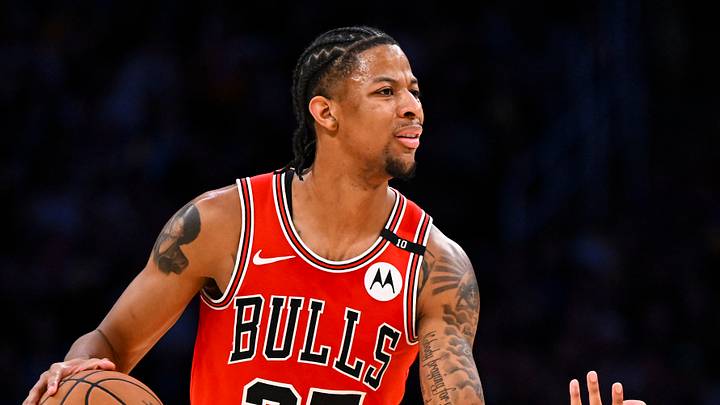
The Thunder, then, needed to add a player to their 15th roster spot expeditiously, and they made their move on Tuesday, signing Dalen Terry from the Golden State Warriors' G-League squad to a two-year deal.
It's a solid addition—Terry, at least theoretically, has the length and the athleticism to fit into Oklahoma City's defensive scheme while also possessing some upside as a perimeter shooter. But after four NBA seasons, Terry hasn't come close to providing consistent enough minutes or production to be considered an immediate solution for Oklahoma City.
If he's going to be the reliable rotation player they need, he's going to need to both hit his 3-point shots and provide consistent defensive play with enhanced minutes. It's a gamble the Thunder were forced to take, though, at this point in the season.
Dalen Terry isn't an immediately guaranteed win for the Thunder—although the upside is there
It's important to note that the only reason Terry isn't on the Warriors right now, and was able to sign with the Thunder in the first place, is that he's no longer eligible for a two-way deal. He spent training camp in Golden State on an Exhibit-10 contract, and his breakout performance against the Portland Trail Blazers—in which he posted 23 points, eight rebounds, and nine assists while knocking down nine of his 18 shots from the field—would've been enough to secure him a roster spot in many other circumstances.
But Golden State needed Brandon Williams, who was also on a non-guaranteed deal, to serve as a backup point guard behind Stephen Curry. While Georges Niang's deal was only partially guaranteed, the Warriors owed him $1.8 million whether he made the roster or not, and they weren't going to be paying a player that without having him provide minutes to the rotation.
Terry, who's entering his fifth NBA season, wasn't eligible to take one of Golden State's two-way spots, and off to the G-League he went.
But don't count that lone preseason performance as a true measure of what Terry can provide to the Thunder from the jump. Across limited minutes in four seasons with the Chicago Bulls and Philadelphia 76ers, Terry averaged just 3.5 points, 1.7 rebounds, and 1.2 assists while knocking down 31.4% of his attempts from beyond the arc. Even as a former first-round pick, he struggled heavily to crack the rotation in Chicago, and his chances didn't seem to be markedly better in Golden State.
Now, the Thunder don't need Terry to be a difference-maker on a game-to-game basis. But they need help on the wing—with Isaiah Joe and Aaron Wiggins out of the fold, the bulk of those minutes will now go to Jared McCain and, at times, Bennett Stirtz. Terry, at 6'6" and 210 lbs, can theoretically provide some cushion there as the season wears on—especially as the Thunder operate now with just 12 available players on the roster. It's worth mentioning that Micah Peavy was added as well on a two-way contract, but it remains unclear what his rotational role will be now that Terry is in the fold.
If Terry can acclimate to Oklahoma City's defensive scheme quickly, he'll have a path to minutes, and he's versatile and switchable enough that that's a realistic outcome. But a 30% 3-point shooter can't do much in this offense based on what the Thunder need right now, and Terry is going to need to take an immediate leap as a shooter and a complementary playmaker if he wants to solidify a role in Mark Daigneault's rotation.
The Thunder need minutes, and Terry, at the very least, can help ease some of the burden on the healthy players on the roster. But he's going to need to take a real leap if he's going to make the impact Oklahoma City is likely hoping for.
 Add us as a preferred source on Google